
MOBILITY FOUNDATIONS TRAINING
"Strong bodies start with smart movement."
3 & 4 October, 2026
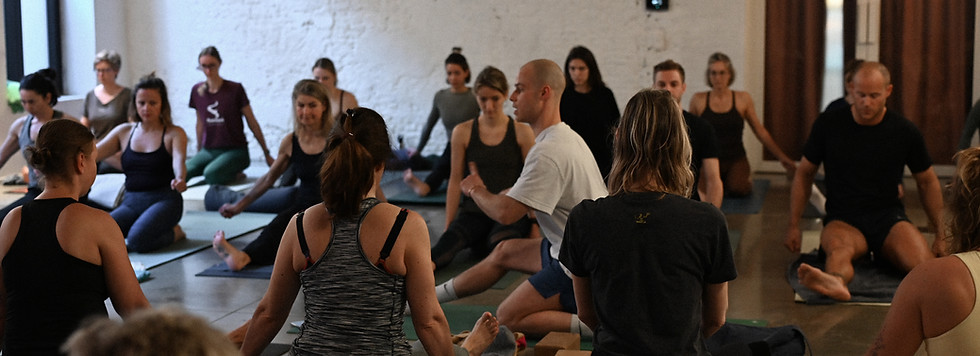

MOBILITY (TEACHER) TRAINING
“When the body gets working appropriately, the force of gravity can flow through. Then, spontaneously the body heals itself.”
— Ida Rolf
Mobility is more than flexibility.
It’s about being able to use, control and support the range you already have.
As a yoga, pilates or movement teacher, you see it every day:
-
students moving deeply into poses, but still searching for control
-
flexible bodies that would benefit from more stability
-
or stiffer joints where progress feels slow or unclear
Mobility gives you the tools to better understand and support these differences.
In this training, you’ll learn how to not only create space in the body,
but how to actively control and strengthen that space.
Yoga builds awareness, flow and freedom.
Mobility complements that by adding structure, clarity and long-term resilience.
You’ll develop a deeper understanding of how the body moves,
and how to translate that into both your personal practice and your teaching.
Who can participate?
-
Movers who are curious and enjoy learning
-
Yoga, pilates and movement teachers who want to deepen their understanding and coaching skills

IN THIS TRAINING YOU'LL DISCOVER
We make mobility simple, practical and immediately applicable.
You’ll gain insight into:
-
What mobility really is (beyond flexibility)
-
The difference between active and passive range of motion
-
How to build strength and control in end ranges
-
How mobility can support both hypermobile and stiffer bodies
Everything is explained in clear, human language and directly linked to what you see and feel in practice.
This is a highly practical training. You won’t just understand mobility, you’ll learn how to apply it:
-
Practical mobility drills and exercises
-
How to integrate mobility into your yoga or pilates practice
-
How to better read bodies and recognise patterns
-
How to guide your students with more clarity and confidence
You’ll start to recognise things you may already notice:
-
a lower back that takes over in hip work
-
wrists or shoulders that get overloaded
-
positions that look accessible, but feel unstable
And more importantly, you’ll learn what to do with it.
You’ll leave with tools you can use immediately to support your own body and guide others in a more precise and sustainable way.

ABOUT MATTHIAS
Matthias is a sports physiotherapist and manual therapist specialised in mobility.
His work focuses on helping people move better and understand their body more deeply not through quick fixes, but through long-term, sustainable solutions.
His approach combines:
-
Clinical reasoning from years of hands-on experience
-
Evidence-based mobility training (including FRC Functional Range Conditioning)
-
A practical, active view on movement inspired by both rehabilitation and performance environments
Rather than chasing temporary relief, his work is centred around:
-
building capacity in the body
-
improving how joints function and adapt
-
and helping people take ownership of their movement
With an academic background (KU Leuven) and over 8 years of experience in sports physiotherapy and manual therapy, he translates complex concepts into clear and practical tools.
The LIFT philosophy is simple:
No quick fixes but a smart, structured way to support your body long-term.
So you can keep doing what you love, with more freedom, confidence and control.
